Thousands from across campus and the Bay Area will gather at Stanford Stadium this weekend for three concerts by K-pop band BTS. The group’s Arirang World Tour marks their long-awaited return to the stage after the completion of their mandatory military service. It’s also a unique opportunity for Stanford.
“BTS is one of the biggest bands of all time, so being able to say ‘I was here for that,’ is pretty special,” said Deborah Cullinan, Stanford’s vice president for the arts.
The band will play three sold-out shows May 16, 17, and 19 – the only Northern California stops on the group’s tour, which began April 9. Their last complete tour wrapped in 2019; a scheduled tour in 2020 was canceled due to the COVID-19 pandemic.
Plan ahead
The concerts will have significant impacts on campus traffic flow and parking on Saturday, May 16; Sunday, May 17; and Tuesday, May 19. Amplified sound will be audible starting at approximately 5:30 p.m. through 10 p.m. on show nights. The concerts will conclude at 10 p.m. each night. There will be fireworks at each concert.
At Stanford, BTS will play to a combined audience of about 150,000 over the three days. The event is presented by Stanford Live and Stanford Athletics. The partnership creates a vibrant learning environment and provides best-in-class experiences for students, staff, and everyone associated with Stanford, said John Donahoe, the Jaquish & Kenninger Director and Chair of Athletics.
“Athletics and Arts are powerful ways to build deep connection and community by bringing together individuals from across our community, all with the common thread of creating lasting memories at Stanford,” he added.
BTS is famous for the high production values of their shows, said Marci Kwon, associate professor of art history. “That Stanford Arts is able to pull off something of this significance and complexity speaks to its world-class status.”
Underdogs on the Farm
BTS debuted in 2013 and is among a string of major acts – including BLACKPINK, SEVENTEEN, and Stray Kids – that have brought K-pop to global audiences. The genre can be traced to the 1960s U.S. military bases in Seoul, where Korean performers adapted American music to entertain American troops and Korean audiences, Kwon explained.
Since then, an idol system emerged in which entertainment companies train and create performers with an emphasis on the entire act – the music, dancing, visuals, etc. – rather than just one element. Kwon described the assemblage as Gesamtkunstwerk, a German term for a total work of art. She credits K-pop’s more recent rise to numerous factors, including Korea’s economic and political liberalization of the 1990s, a distinctive fan culture, and social media.
“Part of what makes BTS distinctive is their underdog story. They started out from a small entertainment company instead of a major conglomerate,” she said. “They were also strategic about using social media to cultivate intimate relationships with their fans.”
BTS attracts a diverse, highly organized fandom known as ARMY. Sofia Islas has wanted to see BTS in concert since 2017, when she first heard their music as an 11-year-old in Paraguay.
“Their songs warm people’s hearts and can help them heal if they’re in a dark place,” the Stanford sophomore said. “I admire them so much because they started from the bottom and made their way up with the positive messages and stories they share with everyone.”
She was so inspired by the band’s emphasis on kindness and self-love, she says, that she was motivated to learn to read English, since media about the band was scarce in Spanish.
On Sunday, she’ll see them live for the first time.
“It’s such a full circle moment,” she said. “I literally just have to walk from my dorm to the stadium.”
Concert FAQs
Going to a concert? Here’s what to know before you go, including maps, schedules, and FAQs.
BTS is, by many metrics, the most popular band of any genre today. They contribute $4.5 billion annually to South Korea’s GDP, have 40 billion Spotify streams, and 81 million Instagram followers. Their most recent album sold 4 million copies in its first day, and their Arirang tour is projected to generate over $1 billion.
Their visit to Stanford will add to what Cullinan described as Stanford’s “storied history” of music. Over the years, other widely popular artists have performed on the Farm. The Grateful Dead played numerous shows at Maples Pavilion and Frost Amphitheater in the 1970s and 1980s. And last year, Coldplay played two sold-out shows at Stanford Stadium for their Music of the Spheres World Tour.
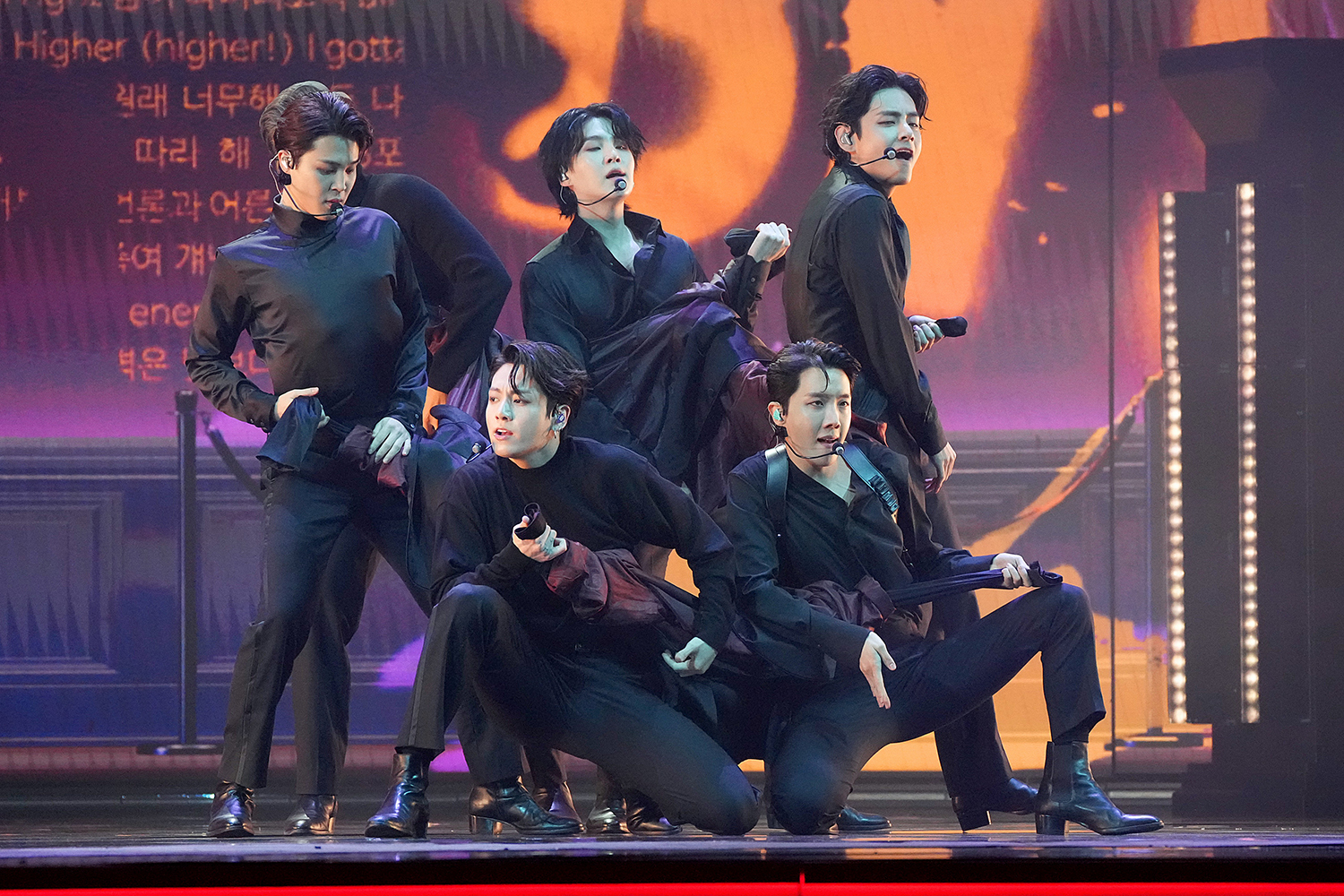
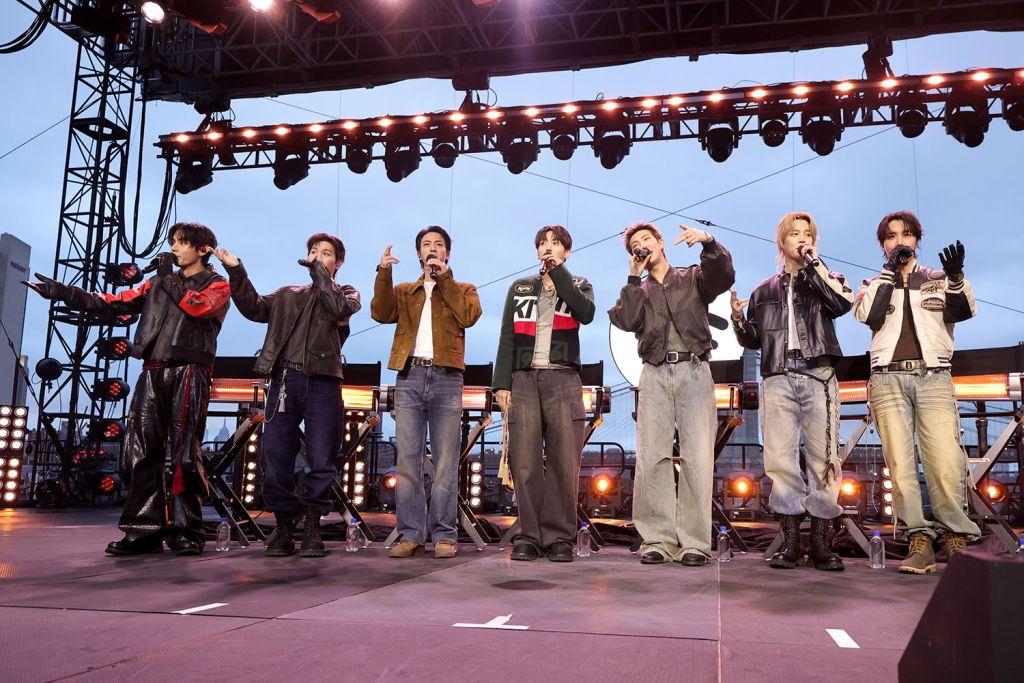
BTS perform onstage during the 64th Annual Grammy Awards on April 3, 2022, in Las Vegas, Nevada. | Kevin Mazur / Getty Images
A door to Stanford
The logistics of BTS’s three concerts have required coordination across the university. “It takes a village to do something like this, so it’s really a partnership,” said Cullinan, adding that several Stanford students will help with patron support, particularly ADA services.
Together, Stanford Arts and Athletics are working closely with city, county, transit, and public safety agencies on logistics, including ticketing, parking, and transportation. While such events are large undertakings for any venue operator, they can have significant economic benefits for the local communities.
According to Oxford Economics, last year’s Coldplay concerts at Stanford generated approximately $32 million for the regional economy, including over $18 million from nonlocal patrons, and $2.2 million in state and local taxes. The events also supported 220 total full-time equivalent (FTE) jobs.
Such live events also provide unique opportunities for Stanford Athletics and Arts to partner. “Sports and arts are the front door for the university – they’re the way that we welcome people in,” said Cullinan.
Students engaged with Stanford Arts and Athletics are finding professional opportunities. Cullinan noted that last year, a student who interned for Stanford Live and worked on the Coldplay concert has since graduated and is now working for Live Nation.
“It can be hard for young people to imagine their futures today, especially for those who want to work in creative industries,” she said. “But we can engage them and show them pathways so they’ll have experience on their resume that will be unlike anything that any other student has.”
Details about all three BTS shows at Stanford Stadium, including parking and bag policies, are available at gostanford.com/bts.
Writer
Alex Kekauoha